
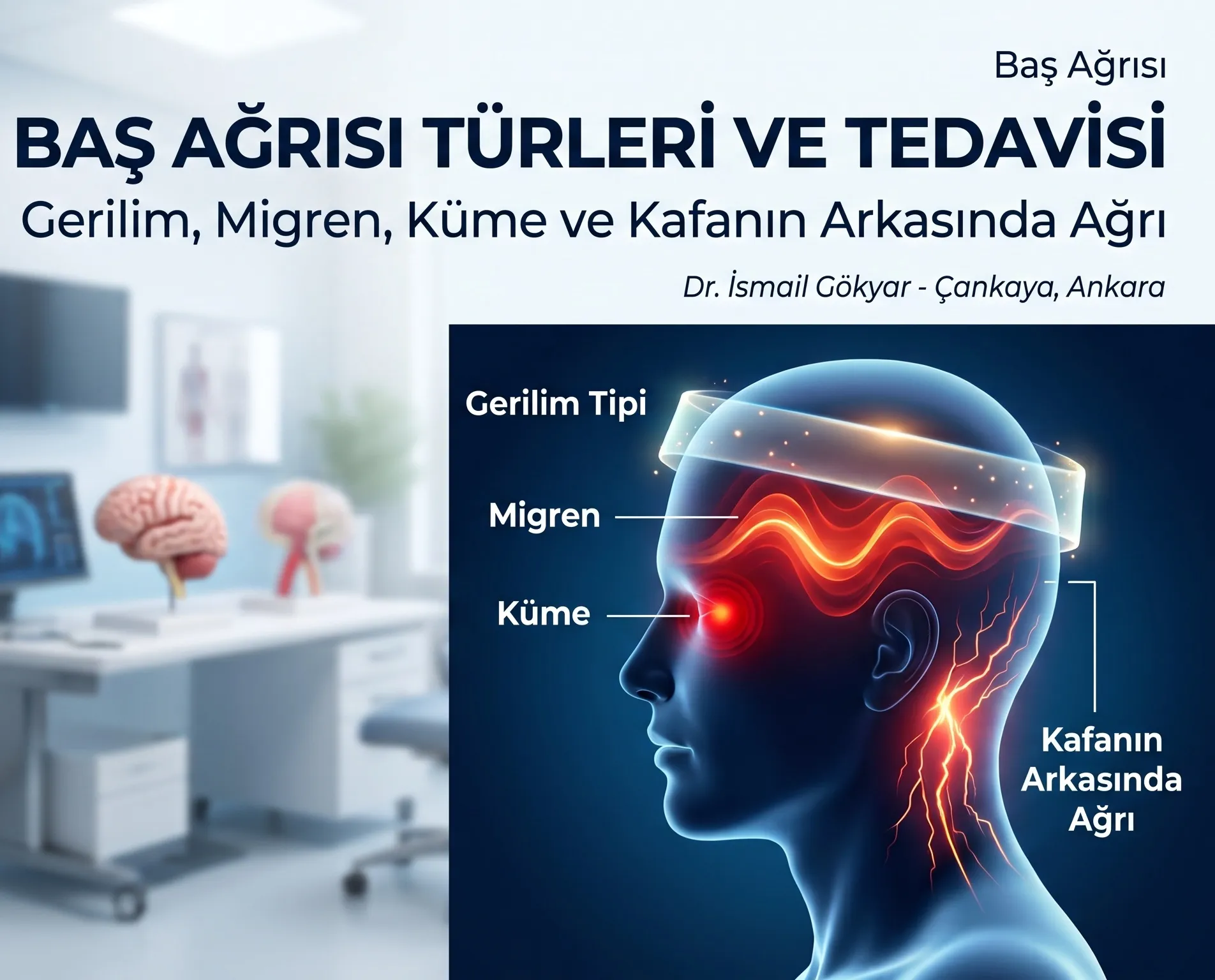
Pain can be an unavoidable part of our daily lives; however, when it comes to headaches, this condition is not just a discomfort but can also signal an underlying significant health issue. As Dr. İsmail Gökyar, we are here at our clinic in Çankaya, Ankara, to accurately diagnose the types of headaches our patients experience and offer effective treatment methods.
What are the Types of Headaches and When Should They Be Taken Seriously?
Headaches can appear in various forms such as cluster headaches, migraines, and tension-type headaches. Each manifests with different symptoms, and in some cases, can be a harbinger of serious neurological problems. Especially headaches that start suddenly, increase in intensity, or are accompanied by other symptoms must be evaluated by a specialist.
Types of Headaches: Symptoms and Characteristics
Headaches are generally divided into two main categories: primary headaches (those not caused by another medical condition) and secondary headaches (those that are a symptom of another medical condition). Let's take a closer look at the most common types of headaches.
1. Tension-Type Headache: The Most Common Guest
Tension-type headache is the most frequently encountered type of headache. It is often described as a tight band or pressure sensation on both sides of the head. Tension may also be felt in the neck and shoulders. Stress, fatigue, and poor posture can trigger this type of pain.
- Symptoms: Pressure sensation around the head, dull pain, muscle tension.
- Duration: Typically ranges from 30 minutes to several hours.
- Characteristic: Usually does not affect daily activities.
2. Migraine: Throbbing Pain That Intensifies
Migraine is a severe, throbbing headache, usually felt on one side of the head. It comes with accompanying symptoms such as sensitivity to light, sound, and smell, nausea, and vomiting. Physical activity can worsen the pain.
- Symptoms: Severe throbbing pain, sensitivity to light/sound/smell, nausea/vomiting.
- Duration: Can last from 4 hours to 72 hours.
- Characteristic: Usually restricts daily activities, sometimes starts with an aura.
3. Cluster Headache: The Most Severe Pain Experience
Cluster headache is one of the most severe types of headaches known. It is described as a sudden, stabbing pain around the eye or temple. The pain is usually unilateral and accompanied by autonomic symptoms such as watery eyes, nasal discharge, and drooping eyelids. These pains occur in periods called 'clusters' and recur at regular intervals.
- Symptoms: Severe, sharp pain around the eye or temple, watery eyes, nasal discharge, drooping eyelid.
- Duration: Lasts from 15 minutes to 3 hours, can recur multiple times a day.
- Characteristic: Provides no relief even at rest, the patient is restless.
Pain at the Back of the Head: Causes and Treatment Approaches
Experiencing pain at the back of the head can stem from many different causes, and consulting a specialist for an accurate diagnosis is crucial. Pain in this region is often associated with conditions such as tension-type headaches, neck-related pains (cervicogenic headache), or occipital neuralgia. Occipital neuralgia is a sharp, stabbing pain resulting from irritation or compression of the occipital nerves at the back of the head. This pain can radiate from the neck to the scalp and is sometimes described as an electric shock sensation.
If you have complaints of pain at the back of the head and this pain has become chronic, intensified, or is accompanied by symptoms such as numbness/tingling, this condition absolutely must be evaluated by a specialist doctor. As Dr. İsmail Gökyar, we utilize advanced diagnostic methods and modern treatment approaches to determine the source of such pains and create personalized treatment plans. Remember, accurate diagnosis is the first step to effective treatment.
When to See a Doctor? Important Warnings from Dr. İsmail Gökyar
While most headaches are harmless, some situations may require urgent medical attention. It is important to consult a neurology specialist like Dr. İsmail Gökyar in the following situations:
- Sudden Onset, Very Severe Headache: If you describe it as the worst headache of your life.
- Pain at the Back of the Head accompanied by Fever and Stiff Neck: Could be a symptom of meningitis.
- Changes in Vision, Numbness, or Difficulty Speaking: May indicate a stroke or another neurological emergency.
- Headache After Head Trauma: Could be a concussion or a more serious injury.
- Chronic Headaches or Headaches Not Responding to Treatment: Headaches that recur constantly or reduce your quality of life.
- New Onset Headache Over the Age of 50: Especially in individuals with no prior history of headaches.
Headache Types Comparison Table
| Feature | Tension-Type Headache | Migraine | Cluster Headache |
|---|---|---|---|
| Severity | Mild - Moderate | Moderate - Severe | Very Severe |
| Location | Usually bilateral | Usually unilateral | Around eye/Temple (uni.) |
| Character | Pressure, tightness | Throbbing, pulsating | Sharp, stabbing |
| Accompanying Symptom | Muscle tension | Nausea, light/sound sens. | Watery eye, nasal discharge |
| Duration | 30 min - Several days | 4 - 72 hours | 15 min - 3 hours |
You Might Also Be Interested In:
To learn more about trigeminal neuralgia, another severe and specific type of headache, please visit our blog post: Which Doctor to See for Trigeminal Neuralgia? The Right Address in Ankara.
Dr. İsmail Gökyar: Your Health Service in Çankaya, Ankara
At our clinic in Çankaya, Ankara, as Dr. İsmail Gökyar, we provide services with a team specialized in headache diagnosis and treatment. We perform a detailed neurological examination and, if deemed necessary, advanced tests to determine the type and cause of your headache. We aim to help you manage your pain and improve your quality of life with modern and personalized treatment approaches. Take the first step to feel better and contact us.